Mother
The Curious Incident of the Dog in the Night-TimeMother is not dead, although Christopher is told twice that she is: first that she died two years earlier, and later that she died in hospital after an illness. The letters he discovers expose the truth and reveal a fuller history of her marriage, her loneliness, and her departure for London. Because her account reaches Christopher in writing, her absence is first presented as a fact and only later opened into a voice capable of explaining what happened.
Identity and Background
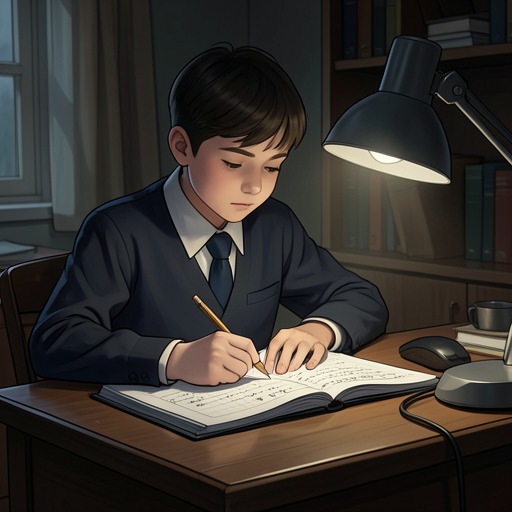
Mother is Christopher’s mother and the absent parent around whom his understanding of home is reorganized. In the early account, Father returns from work and asks Christopher whether he has seen her; the narrative then gives the blunt statement that she died two years ago. The gap between that claim and the domestic scene—Christopher letting himself in with the secret key under a flowerpot and continuing to build an Airfix Sherman tank—makes the absence appear settled, even as the question of where she has gone remains unresolved.
The claim is repeated in a second form: Mother supposedly dies in hospital two weeks after Christopher begins writing his account. Christopher has not visited her there. Father says he has brought her food from Marks and Spencer’s, that she looked as if she were getting better, and that she had Christopher’s Get Well card beside her bed. Its pictures of cars provide a specific token of the relationship Father describes, but that account is also part of the deception: the reported recovery and death are not a reliable explanation of Mother’s absence.
Marriage and Family Conflict
Mother’s letter explains that she and Father had increasingly stopped talking because their conversations seemed to end in arguments. She describes herself as quick to lose her temper and Father as more patient, though her account also records his anger: after she hit him during a quarrel, he called her stupid and told her to pull herself together. Her account does not reduce the marriage to a single cause; it presents loneliness as something that grew through repeated domestic conflict and a failure to communicate.
A painful episode centers on Christopher’s eating. Mother had cooked food that he refused, and, worried that he had eaten little for days and was becoming thin, she threw it across the room. Christopher threw a chopping board that struck her foot and broke her toes. At the hospital, she had her foot put in plaster; she says she could not walk properly for a month, during which Father cared for Christopher. The injury and its aftermath sharpened her sense of exclusion: she saw that Christopher was calmer with Father, and interpreted their ease together as evidence that they did not need her.
The letter also describes an earlier Christmas shopping episode in which Christopher became overwhelmed, crouched on the floor with his hands over his ears, knocked mixers from a shelf, and screamed. Mother had to pay for two broken mixers and walk him home because she believed he would not take the bus. She remembers crying afterward, while Father initially comforted Christopher and said things would be all right. When she said she could not cope any longer, the disagreement became another argument. The scene grounds her account of strain in practical care, public distress, and the different ways she and Father responded to Christopher—not simply in a generalized lack of affection.
Roger and the Decision to Leave
As her marriage deteriorated, Mother began spending time alone with Roger because she could talk to him and no longer felt lonely in his company. She says Roger told her that he and Eileen were no longer in love and had not been for a long time; she and Roger recognized that their loneliness gave them something in common, and then realized they were in love. Roger proposed that Mother leave Father and live with him, but she initially refused because she could not leave Christopher. Roger was sad, she writes, but understood that Christopher was important to her.
The account makes her eventual departure more complicated than a simple choice of a new partner over her child. Mother recalls feeling invisible when she watched Christopher and Father together, and believing that Father and Christopher might be better off if she were no longer living in the house. In the surviving excerpt, this thought follows her account of arguments, Christopher’s injury, and her month of limited mobility; it shows how her sense of being unwanted took shape within a family in which she still says Christopher mattered deeply to her.
Letters and the Reversal of Her Death
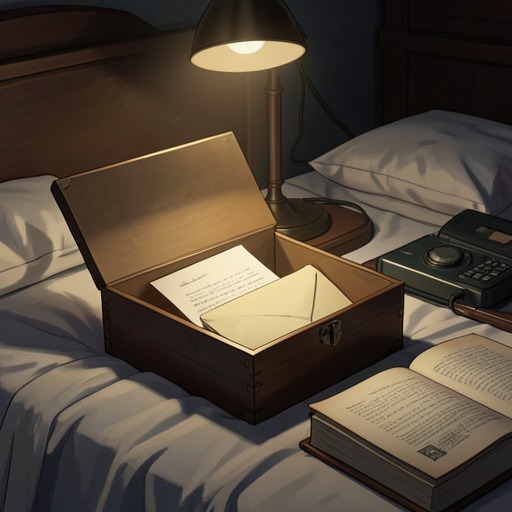
The discovery of Mother’s letters reverses the story Christopher has been given. One letter has no date, so he wonders whether someone else wrote it while pretending to be her. He checks the envelope and makes out a postmark: 16 October 1997, eighteen months after the date he had been told she died. The postmark turns an uncertain suspicion into concrete evidence that Mother was alive after her supposed death.
The letter itself presents an ordinary life in progress. Mother apologizes for the long silence, describes a new secretarial job at a steel factory, and explains that she and Roger have moved to a new flat in Willesden. She gives details that make the new setting tangible: the factory’s machines shape steel, and that week they are making a flower-shaped roof for a shopping-centre cafe in Birmingham; the flat is less pleasant than the old one, but Roger has bought it, so they can furnish it and choose its wall colours. She says she is tired from moving and adjusting to work, hopes Christopher will write to her at the new address, and tells him that she still loves him and thinks about him all the time.
Mother’s explanation therefore arrives in two registers: the intimate appeal of a parent addressing her son and the practical record of a changed job and home. The letters make her absence legible without making it simple. Christopher’s suspicion that the first undated letter might be forged gives way to the decisive postmark, while the letters’ everyday details contradict the finality of the story that she died.
Character and Narrative Significance
Mother emerges through incompatible-seeming accounts that the letters hold together: she can lose her temper and make mistakes, feel overwhelmed by Christopher’s needs, and still refuse to leave him when Roger first proposes a shared life. Her account does not erase the harm caused by the false story of her death or the consequences of her leaving; it supplies her own circumstances and feelings where Christopher had been given an invented explanation. She is therefore not only the absent figure in his family history but a person whose perspective arrives late enough to transform it.
The contrast between the two reported deaths and the dated postmark gives the letters a structural force. The reader first encounters loss as a confident assertion, then receives a story of illness and a Get Well card, and only afterward finds evidence that Mother was alive. Her written voice extends the novel’s inquiry into truth and trust into family life: what Christopher has been told about his mother proves false, while the letters offer a detailed but still personal account of why she left and what she wanted him to know. Her absence is not undone by explanation, but it becomes a relationship that can be read, questioned, and addressed.